Summary
Deciding between aging at home and moving to a senior living community in Florida often comes down to honest cost comparison and lifestyle preferences. Understanding the true cost of aging at home vs. assisted living in Florida helps families make informed decisions that align with both their budgets and their day-to-day needs.
- Home-based aging expenses include housing costs, maintenance, home modifications, and in-home care—which accumulate significantly over time as needs increase
- Senior community fees bundle most services into one predictable monthly payment, covering housing, meals, housekeeping, fitness programs, and care support
- Florida's lack of state income tax helps, but property taxes, insurance, and upkeep costs still add up for homeowners
- Once in-home care needs reach several hours daily, a community's bundled fee often becomes the more cost-effective option
- Lifestyle matters equally: consider whether you prefer social engagement and built-in support or prefer maintaining independence at home with family nearby
Stay in the house you know, or move into a senior living community? For most people in Florida, that question comes down to two things: money and the kind of day-to-day life you want. The cost of aging at home vs. assisted living in Florida is rarely as lopsided as it first appears, and the math works much the same whether you already live in Boca Raton or are planning a move from another state. Here’s how the two options compare, dollar for dollar and day for day.
Florida Costs Vary More Than You Might Expect
Florida gets talked about as one place, but it’s a large state with distinct regions, and living costs differ noticeably from one to the next. A budget that stretches comfortably in a smaller inland town may feel tighter along the South Florida coast. Boca Raton, in Palm Beach County, is one of the state’s more sought-after areas, which is worth factoring in whether you plan to keep a home here or move into a community like Veranda Club.
Climate is the other regional variable. Warm coastal weather is a big part of Boca Raton’s appeal, but humidity and storm season also mean homes here need more upkeep than homes in drier parts of the country.
What It Really Costs to Stay Home
Florida has no state income tax, which helps anyone living on a fixed income, but that’s often where the savings stop. The real cost of aging in place in Florida includes expenses that build up gradually:
- Housing: mortgage or rent, property taxes, homeowners insurance, and any HOA fees
- Upkeep: air conditioning, lawn care, pest control, and storm-related repairs
- Home modifications: grab bars, walk-in showers, ramps, or stair lifts as mobility changes
- In-home help: the home care costs Florida seniors pay for aides, housekeeping, and rides once those tasks get harder
Add these together, and home modifications vs. community living costs look very different from the simple rent-versus-fee comparison most people start with.
How a Community Fee Compares
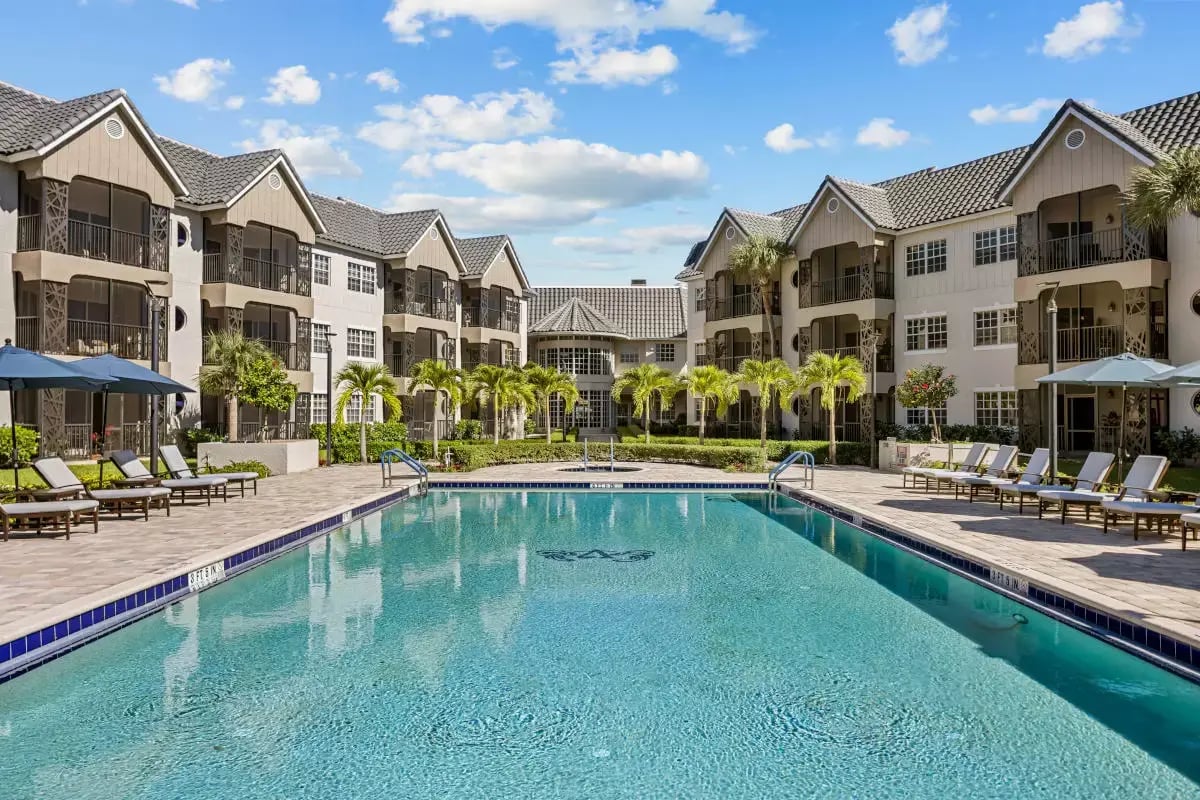
A monthly fee at a senior living community bundles most of those line items into one predictable number. At Veranda Club in Boca Raton, FL, residents in Active Independent Living and Assisted Living pay a single fee that covers:
- The apartment home and its maintenance
- Chef-prepared meals through the Sensations dining program
- Weekly housekeeping and complimentary scheduled transportation
- Dimensions Health & Fitness programming, an on-site gym, and a heated pool with outdoor spa
- Help with daily tasks for assisted living residents, with professional support available whenever it’s needed
For an honest assisted living costs Florida comparison, put your current monthly spending (including the help you’d likely need to add over the next few years) next to a community’s published floor plans and pricing. Senior living expenses in Florida often land closer to the at-home total than families expect, and they stay far more stable as needs change.
Your Lifestyle Matters as Much as Your Budget
Money is only half the decision. Before you choose, think about:
- Whether you enjoy being around people most days or prefer a quieter routine
- How you’d get around if driving became harder
- Who would handle cooking, cleaning, and repairs if you couldn’t
- How quickly help could reach you in an emergency
If a full calendar and neighbors down the hall sound appealing, a community will likely suit you. If you value solitude and have family close by, staying home may work well for now.
Frequently Asked Questions
Is It Cheaper to Age at Home or Move to Assisted Living in Florida?
It depends on how much help you need. Once in-home care runs several hours a day, a community’s bundled fee is often the lower total.
Does Florida Tax Retirement Income?
No. Florida has no state income tax, though property taxes and insurance still apply to homeowners.
What Living Options Does Veranda Club Offer?
Veranda Club offers Active Independent Living and Assisted Living, so residents can add support later without moving to a new community.
Making Your Decision in Boca Raton
With a clear view of what staying home costs alongside what a community fee includes, you’re well positioned to choose what fits both your finances and your lifestyle. If home is right for now, local organizations in Boca Raton can help you plan for aging in place. If you’d like to see the alternative up close, schedule a personalized tour of Veranda Club.