Summary
When families compare nursing home vs. senior living community options, understanding the difference comes down to how much medical care your parent needs. A nursing home provides round-the-clock clinical care for complex health conditions, while a senior living community offers residential support focused on daily life and quality of time with peers.
- Skilled nursing requires licensed nurses on-site 24/7 for medical supervision; senior living communities help with bathing, dressing, medication, and mobility support during regular hours.
- Senior living communities feel residential with private apartments, chef-prepared meals, and social programs; nursing homes resemble hospital settings with clinical furnishings and medical schedules.
- Assisted living works best for older adults needing daily help but not constant medical supervision, preserving privacy and choice while providing companionship.
- Senior living typically costs less than skilled nursing and may bundle housing, meals, housekeeping, and programs into one monthly rate.
- Communities often allow residents to move between independent living and assisted living as needs change, without leaving the same neighborhood.
When families start looking at care for an aging parent, the terms blur together fast. Someone mentions a nursing home in one breath and a senior living community in the next, as if they were the same thing. They aren't. The nursing home vs. senior living community question is really a question about how much medical care your family member needs, and knowing the difference between nursing home and assisted living makes the whole decision clearer. Veranda Club in Boca Raton, FL, sits firmly on the senior living side of that line, and here's what that means in practice.
A skilled nursing setting provides round-the-clock medical care for people with complex health conditions who need constant supervision from licensed nurses and physicians. A senior living community offers a residential setting with varying levels of support. Skilled nursing focuses on clinical treatment and rehabilitation. Senior living focuses on daily life, with the right amount of help built in.
The Core Differences in Care and Health Services
The senior living community vs. nursing home distinction starts with the type and intensity of care. Skilled nursing means registered nurses and licensed practical nurses are on-site around the clock, caring for people recovering from surgery, managing serious chronic illness, or needing close medical monitoring.
Senior living communities provide help with everyday tasks rather than continuous clinical treatment. Assisted Living at Veranda Club, for example, pairs residents with team members who learn their routines and step in where needed. Services include:
- Help with bathing, dressing, and grooming
- Medication management
- Mobility assistance and continence support
- Team members available throughout the day and night who coordinate additional services when needs change
The focus stays on quality of life, not managing acute medical conditions. The practical question for families is whether your family memeber needs ongoing clinical care or simply needs a hand with daily tasks. For many older adults, it's the latter.
Lifestyle and Community Atmosphere
The feel of each setting differs just as much. Skilled nursing settings often resemble hospitals, with shared rooms, clinical furnishings, and schedules built around medical needs.
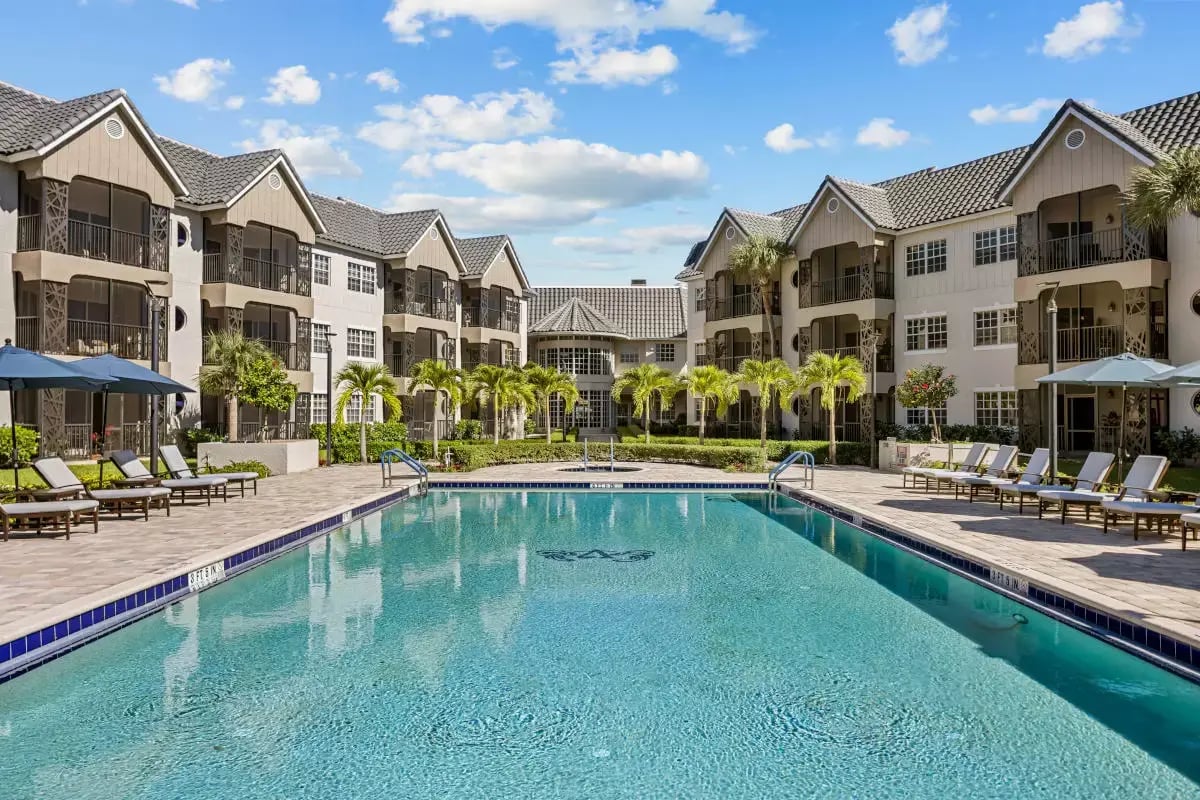
Senior living communities are built to feel like home. At Veranda Club, remodeled in 2024, residents have private apartments with walk-in showers and in-apartment washers and dryers, and chef-prepared meals are served restaurant-style in a formal dining room, a bistro, or a private dining room for family gatherings. The Celebrations and Dimensions programs fill the calendar with:
- Fitness classes and FitCamp® sessions for a range of ability levels
- Art classes, lectures, and guest speakers
- Scheduled outings around Boca Raton and complimentary transportation through Connections
- Live music, social events, and time by the heated pool, hot tub, or bocce court
For a parent who still wants a full day and people to share it with, that atmosphere is the point. Care happens in the background of a life, rather than being the whole of it.
Is Assisted Living Better Than Nursing Home Care?
Whether assisted living is better than nursing home care depends entirely on your specific circumstances. Assisted living works well for older adults who need help with daily routines but not constant medical supervision. It preserves privacy, lets residents make choices about their day, and surrounds them with peers.
Skilled nursing serves people with serious medical needs. It's the right setting for someone:
- Recovering from a stroke or major surgery
- Living with advanced dementia and needing constant supervision
- Requiring wound care, IV therapy, or a feeding tube
- Needing round-the-clock monitoring by licensed medical staff
In those situations, clinical expertise is essential. Still, many families find that assisted living, compared to nursing home care, is the better fit for where their parent is right now: safe, supported, and in good company, without the institutional feel. When health needs change, communities coordinate with outside providers, and Veranda Club offers on-site therapies through Dimensions where available.
Nursing Home Alternatives for Seniors
Families usually go looking for nursing home alternatives for seniors once they realize their parent doesn't need round-the-clock medical care but does need more support than the family can provide at home. Senior living communities answer that in a few ways. Independent living suits older adults who want convenience and company without hands-on help. Assisted living adds personal care and a team nearby. Veranda Club offers both, as Active Independent Living and Assisted Living, so residents can move from one to the other within the same community as needs change. Some communities also offer memory care, though Veranda Club does not, so families whose parent is living with dementia should ask about that early.
What all of these share is connection. For someone who lives alone or has started to feel isolated, a community offers something in-home care rarely can: neighbors.
Cost Considerations and Payment Options
Skilled nursing typically costs more per month because of licensed medical staff and intensive services. Senior living pricing varies by location, apartment size, and level of care. Even so, many families find that one monthly rate covering housing, meals, housekeeping, events, and care is simpler and often better value than piecing those services together at home.
Most families pay with private savings, long-term care insurance, or veterans benefits, and Medicaid may cover skilled nursing in some cases. Veranda Club's guide to practical ways to pay for senior living walks through each option, and it's worth having that conversation early rather than in a crisis.
Making the Right Choice for Your Family
If your family member needs clinical care beyond help with daily tasks, skilled nursing may be necessary. If they need support, companionship, and a safe setting without constant medical supervision, a senior living community usually offers a better quality of life. Schedule a personalized tour of Veranda Club in Boca Raton, FL, and see for yourself what the right kind of support looks like.